Venezuela "The Lost World"
Venezuela, officially the Bolivarian Republic of Venezuela, is a country on the northern coast of South America.
The country comprises a continental mainland and numerous islands in the Caribbean Sea. It borders Guyana to the east, Brazil to the south, and Colombia to the west. Trinidad and Tobago, Grenada, St. Lucia, Barbados, Curaçao, Bonaire, Aruba, Saint Vincent and the Grenadines and the Leeward Antilles lie just north, off the Venezuelan coast. Falling within the tropics, Venezuela sits close to the equator, in the Northern Hemisphere.
A former Spanish colony, independent country since 1821, and now a Social Democratic republic, Venezuela holds territorial disputes with Guyana, largely concerning the Essequibo area, and with Colombia concerning the Gulf of Venezuela. There was a Venezuelan Boundary Crisis in 1985. Today, Venezuela is known widely for its petroleum industry, the environmental diversity of its territory, and its natural features. Venezuela is considered to be among 17 of the most megadiverse countries in the world.
Venezuela is among the most urbanized countries in Latin America; the vast majority of Venezuelans live in the cities of the north, especially in the capital Caracas which is also the largest city. Other major cities include Maracaibo, Valencia, Maracay, Barquisimeto, Ciudad Guayana and the popular tourist city of Mérida. Venezuela is also home to a diversity of wildlife in a variety of protected habitats.
Geography
Monte Roraima, a tepui in Canaima National Park in southeastern Venezuela. The park lies atop the Guiana Shield; its Precambrian geological formations rank among the world's oldest.Venezuela's mainland rests on the South American Plate; With 2,800 kilometres (1,740 mi) of coastline, Venezuela is home to a wide variety of beautiful landscapes. The extreme northeastern extensions of the Andes reach into Venezuela's northwest and continue along the northern Caribbean coast. Pico Bolívar, the nation's highest point at 4,979 metres (16,335 ft), lies in this region. The country's center is characterized by the llanos, extensive plains that stretch from the Colombian border in the far west to the Orinoco River delta in the east. To the south, the dissected Guiana Highlands is home to the northern fringes of the Amazon Basin and Angel Falls, the world's highest waterfall. The Orinoco, with its rich alluvial soils, binds the largest and most important river system of the country; it originates in one of the largest watersheds in Latin America. The Caroní and the Apure are other major rivers.
Pico Bolívar in the northwestern state of Mérida.The country can be further divided into ten geographical areas, some corresponding to climatic and biogeographical regions. In the north are the Venezuelan Andes and the Coro region, a mountainous tract in the northwest, is home to several sierras and valleys. East of it are lowlands abutting Lake Maracaibo and the Gulf of Venezuela. The Central Range runs parallel to the coast and includes the hills surrounding Caracas; the Eastern Range, separated from the Central Range by the Gulf of Cariaco, covers all of Sucre and northern Monagas. The Llanos region comprises a third of the country's area north of the Orinoco River. South of it lies the Guiana Shield, a massive two billion year old Precambrian geological formation featuring tepuis, mysterious table-like mountains. The Insular Region includes all of Venezuela's island possessions: Nueva Esparta and the various Federal Dependencies. The Deltaic System, which forms a triangle covering Delta Amacuro, projects northeast into the Atlantic Ocean.
Though Venezuela is entirely situated in the tropics, its climate varies substantially; it varies from that of humid low-elevation plains, where average annual temperatures range as high as 28 °C (82 °F), to glaciers and highlands (the páramos) with an average yearly temperature of 8 °C (46 °F). Annual rainfall varies between 430 millimetres (17 in) in the semiarid portions of the northwest to 1,000 millimetres (39 in) in the Orinoco Delta of the far east. Most precipitation falls between May and November (the rainy season or "winter"); the drier and hotter remainder of the year is known as "summer", though temperature variation throughout the year is not as pronounced as at temperate latitudes.
Flora and fauna
Venezuela lies within the Neotropic ecozone; large portions of the country were originally covered by moist broadleaf forests. One of seventeen megadiverse countries and among the top twenty countries in terms of endemism, some 38% of the over 21,000 plant species are unique to the country; 23% of reptilian and 50% of amphibian species are also endemic. Venezuela hosts significant biodiversity across habitats ranging from xeric scrublands in the extreme northwest to coastal mangrove forests in the northeast. Its cloud forests and lowland rainforests are particularly rich, for example hosting over 25,000 species of orchids. These include the flor de mayo orchid (Cattleya mossiae), the national flower.
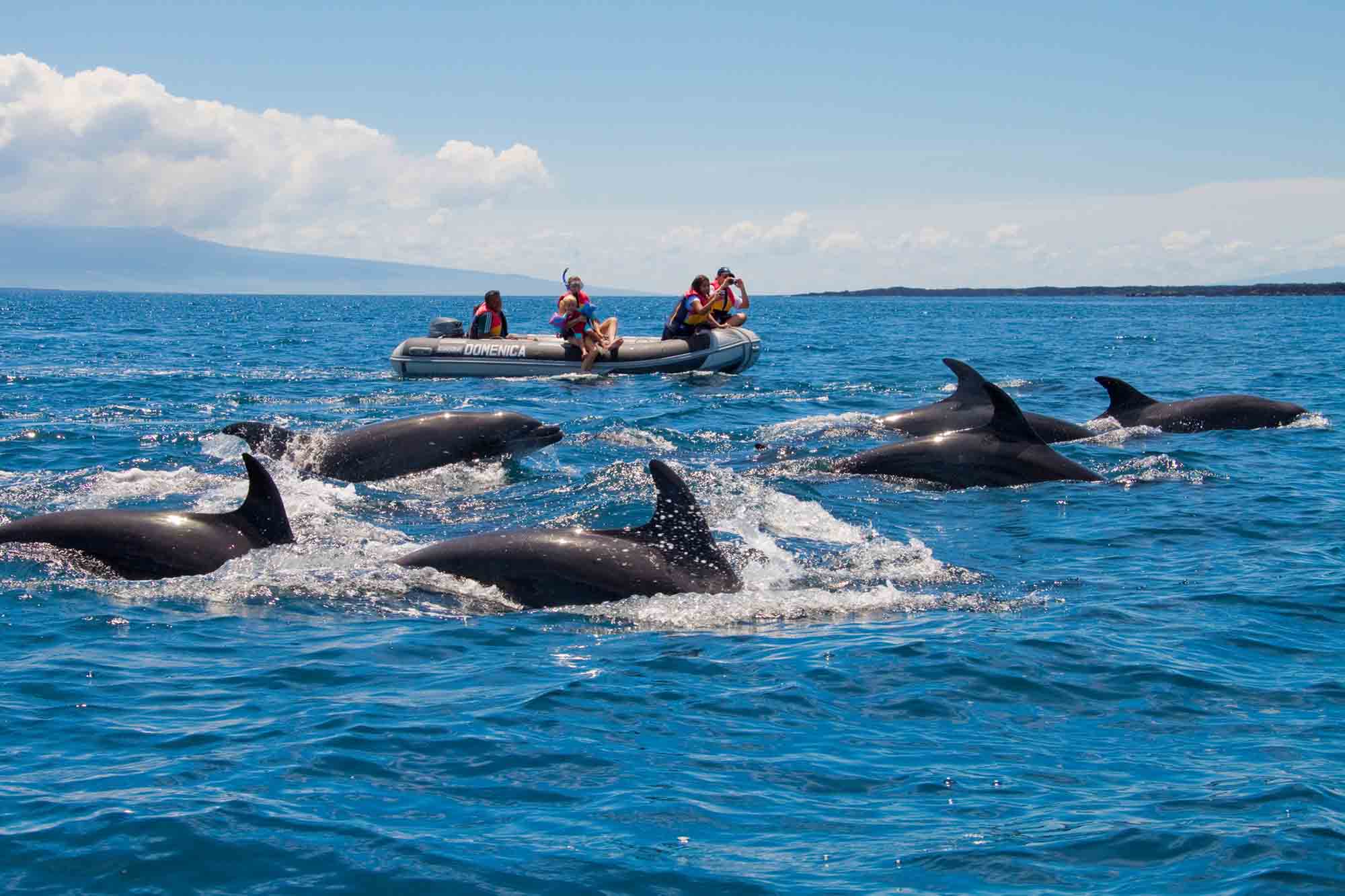
Venezuela's national tree is the araguaney, whose characteristic lushness after the rainy season led novelist Rómulo Gallegos to name it «a primavera de oro de los araguaneyes» ("the golden spring of the araguaneyes"). Notable mammals include the giant anteater, jaguar, and the capybara, the world's largest rodent. More than half of Venezuelan avian and mammalian species are found in the Amazonian forests south of the Orinoco. Manatees, Boto river dolphins, and Orinoco crocodiles, which reach up to 8 metres (26 ft) in length, are notable aquatic species. Venezuela also hosts a huge number of bird species, a total of 1,417, 48 of which are endemic. Important birds include ibises, ospreys, kingfishers, and the yellow-orange turpial, the national bird.
In recent decades, logging, mining, shifting cultivation, development, and other human activities have posed a major threat to Venezuela's wildlife; between 1990 and 2000, 0.40% of forest cover was cleared annually. In response, federal protections for critical habitat were implemented; for example, 20% to 33% of forested land is protected. Venezuela is currently home to a biosphere reserve that is part of the World Network of Biosphere Reserves; five wetlands are registered under the Ramsar Convention. In 2003, 70% of the nation's land was under conservation management in over 200 protected areas, including 43 national parks.
Culture
Venezuela's heritage, art, and culture have been heavily influenced by its Latin American context. These elements extend to its historic buildings, architecture, art, landscape, boundaries, and monuments. Venezuelan culture has been shaped by indigenous, Spanish and Italian, and some African influences. Before this period, indigenous culture was expressed in art (petroglyphs), crafts, architecture (shabonos), and social organization. Aboriginal culture was subsequently assimilated by Spaniards; over the years, the hybrid culture had diversified by region.
Venezuelan art was initially dominated by religious motifs, but began emphasizing historical and heroic representations in the late 19th century, a move led by Martín Tovar y Tovar. Modernism took over in the 20th century. Notable Venezuelan artists include Arturo Michelena, Cristóbal Rojas, Armando Reverón, Manuel Cabré, the kinetic artists Jesús-Rafael Soto and Carlos Cruz-Diez.
Venezuelan literature originated soon after the Spanish conquest of the mostly pre-literate indigenous societies; it was dominated by Spanish influences. Following the rise of political literature during the War of Independence, Venezuelan Romanticism, notably expounded by Juan Vicente González, emerged as the first important genre in the region. Although mainly focused on narrative writing, Venezuelan literature was advanced by poets such as Andrés Eloy Blanco and Fermín Toro. Major writers and novelists include Rómulo Gallegos, Teresa de la Parra, Arturo Uslar Pietri, Adriano González León, Miguel Otero Silva, and Mariano Picón Salas. The great poet and humanist Andrés Bello was also an educator and intellectual. Others, such as Laureano Vallenilla Lanz and José Gil Fortoul, contributed to Venezuelan Positivism.
Carlos Raúl Villanueva was the most important Venezuelan architect of the modern era; he designed the Central University of Venezuela, (a World Heritage Site) and its Aula Magna. Other notable architectural works include the Capitol, the Baralt Theatre, the Teresa Carreño Cultural Complex, and the General Rafael Urdaneta Bridge.
Indigenous musical styles of Venezuela are exemplified by the groups Un Solo Pueblo and Serenata Guayanesa. The national musical instrument is the cuatro. Typical musical styles and pieces mainly emerged in and around the llanos region, including Alma Llanera (by Pedro Elías Gutiérrez and Rafael Bolivar Coronado), Florentino y el Diablo (by Alberto Arvelo Torrealba), Concierto en la Llanura by Juan Vicente Torrealba, and Caballo Viejo (by Simón Díaz). The Zulian gaita is also a popular style, generally performed during Christmas. The national dance is the joropo. Teresa Carreño was a world-famous 19th century piano virtuosa.
Baseball is Venezuela's most popular sport, although football (soccer), spearheaded by the Venezuela national football team, is gaining influence. Famous Venezuelan baseball players include Luis Aparicio (inducted into the Baseball Hall of Fame), David (Dave) Concepción, Oswaldo (Ozzie) Guillén (current White Sox manager, World Series champion in 2005), Cubs Ace Carlos Zambrano, Freddy Garcia, Andrés Galarraga, Omar Vizquel (an eleven-time Gold Glove winner), Luis Sojo, Miguel Cabrera, Bobby Abreu, Felix Hernandez, Magglio Ordonez, Ugueth Urbina, Víctor Martínez, Rafael Betancourt, and Johan Santana (a two-time unanimously selected Cy Young Award winner).
The World Values Survey has consistently shown Venezuelans to be among the happiest people in the world, with 55% of those questioned saying they were "very happy".
Handicrafts
Hammocks and some dark wooden handicrafts can be found throughout Venezuela, as well as gaudy painted statuettes of big-busted women. Some areas such as Falcón state have a tradition of excellent glazed pottery.
Eat
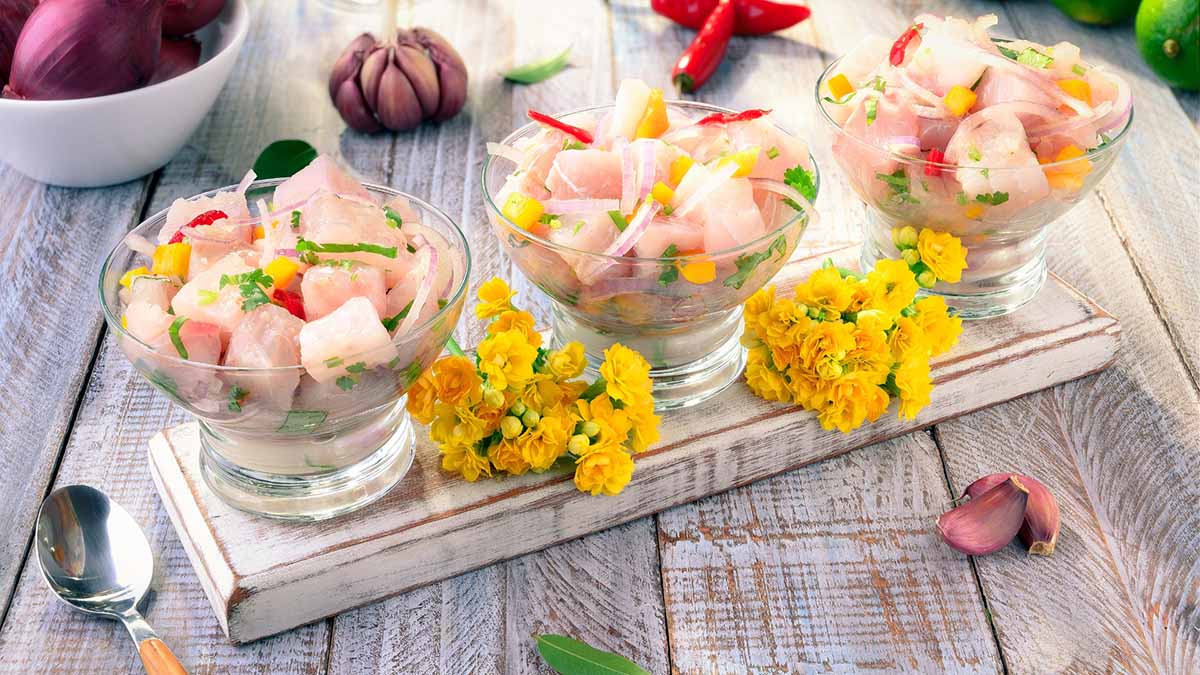
Among fast food are Arepas (the famous are Reina Pepiada and Domino), Hallacas (you can eat this on xmas), Cachapas (with a cheese called "telita" is delicious), also Empanadas (you can find them in any beach and in street stands, use your good judgement went you select a street place to eat) and the best "Perros Calientes"(Hot Dogs). The arepa is the most common Venezuelan food item. It's basically a biscuit that is made out of cornmeal and you can fill it in with any type of food that you want, carne mechada which is shredded beef and which tastes really good. It is called "comida criolla", or Creole food. For slow food, try delicious fish meals, or shrimp soup Cazuela de Mariscos. The traditional Venezuelan lunch is El Pabellón, but is not usually sold at restaurants, just in small family businesses, is mainly rice, black beans, and meat, it also has fried plantain slices. You can also find nice sweets made mainly of sugar. Venezuelan chocolate is really good, especially from a brand named El Rey. It's not that cheap compared with other venezuelan prices but it's still cheap compared to American or European prices, and certainly worth the extra expenditure.
Venezuela Travel
Venezuela has produced more winners of the Miss Universe per capita than any other country; the statistical proof that the country has many beautiful women. But of course the country has a lot more to offer. The capital city of Caracas is a busy place and there are always things going on there. You shouldn't miss out on it. The beach resort of Margarita island is popular with people looking for a place to relax and get a tan. Angel Falls are one of the most spectacular natural wonders in the world. If you think Niagara is great you should really go here. The city of Maracaibo , an oil boom town, in the west of the country has good things to offer to the tourist too. A 160km to the West of Caracas and situated in the center of Venezuela is Valencia is the second largest city and the country's fastest growing economy.