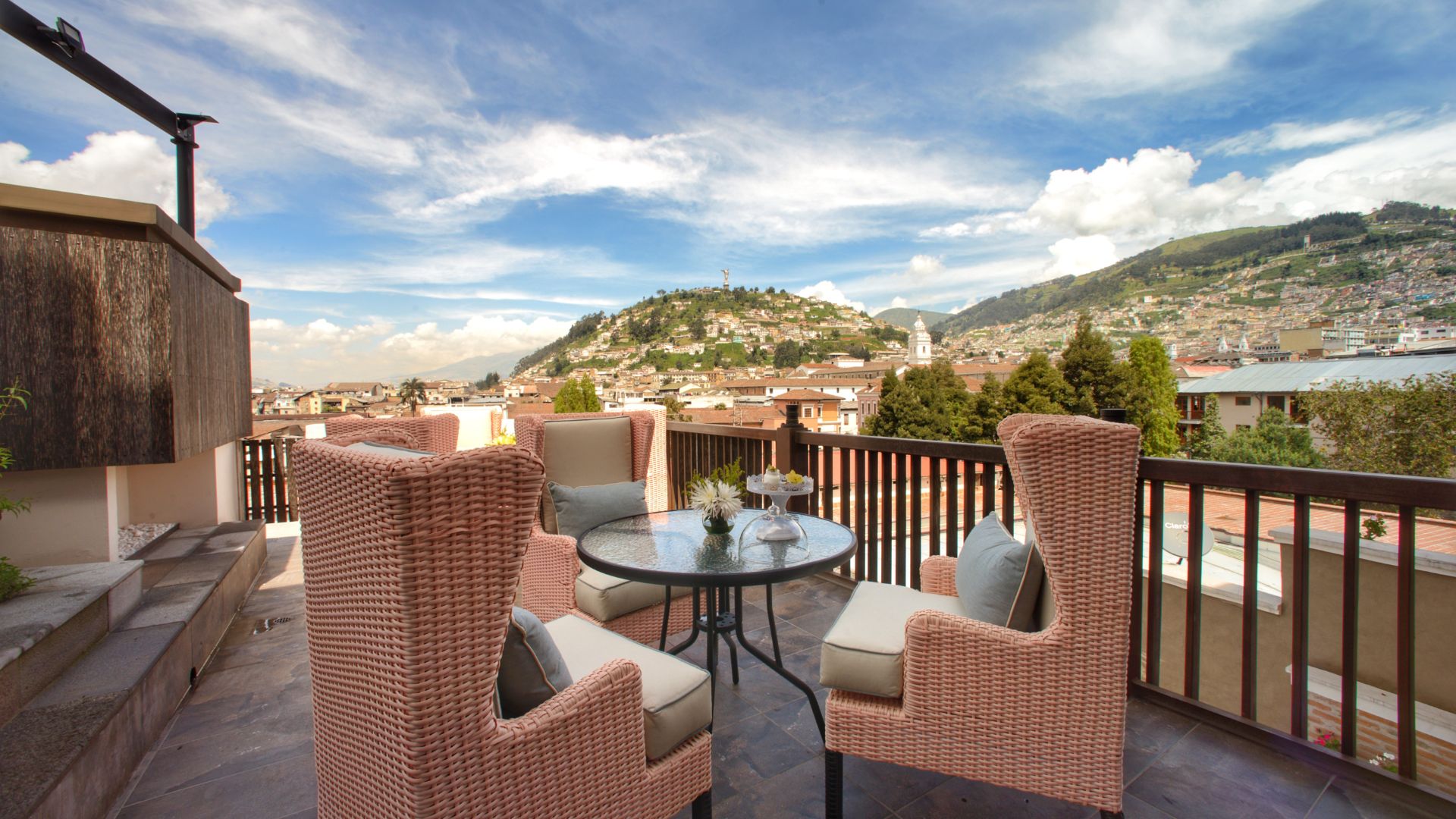
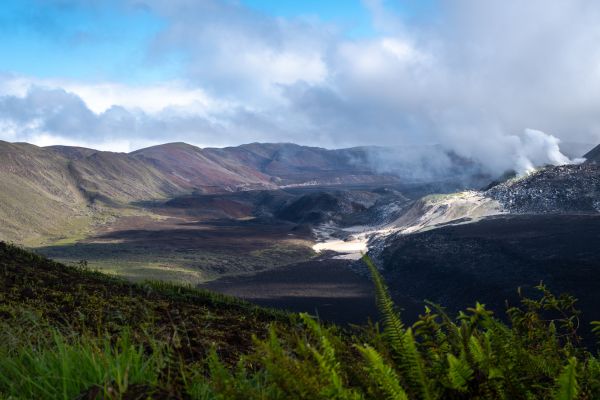
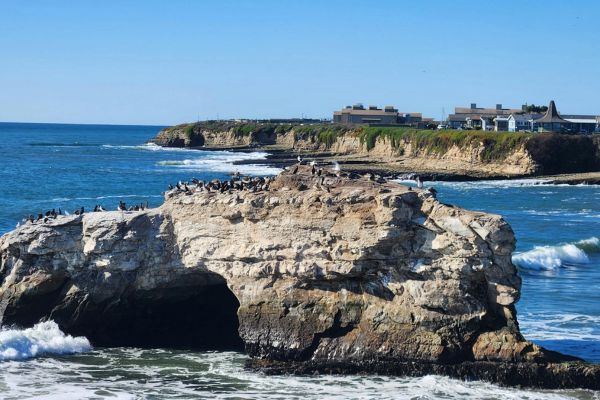
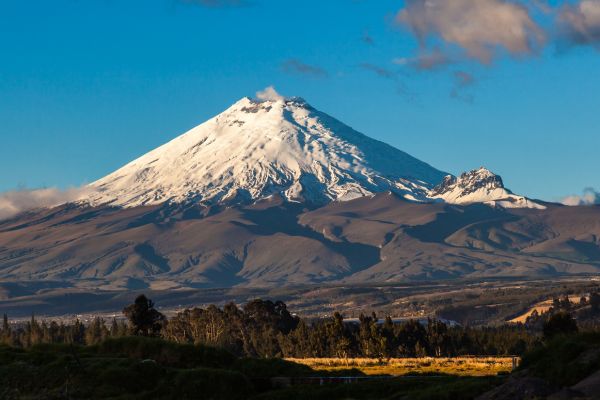
Arrival in Quito introduces travelers to one of the highest capital cities in the world, dramatically set at over 9,000 feet above sea level and encircled by volcanic peaks. The city’s crisp mountain air and commanding Andean skyline provide a natural laboratory that once inspired Alexander von Humboldt. Quito’s layered history, spanning the Quitu civilization, the Inca Empire, and the Spanish colonial period creates a cultural foundation for the scientific narratives that follow. Humboldt used Quito as an operational base to organize expeditions, compare altitudes, and examine relationships between mountain systems and Pacific climatic patterns. Walking its historic streets allows participants to contextualize how geography, politics, and exploration intersected here at the dawn of modern scientific thought.
Ecuador: Birthplace of Modern Science
This 17-day academic journey across the Ecuadorian Andes and the Galapagos Islands retraces the scientific legacy of Alexander von Humboldt, Edward Whymper, and Charles Darwin. Moving from high-altitude Andean ecosystems to the volcanic archipelago that reshaped biological thought, this immersive experience connects field observation, altitudinal study, and comparative analysis in the very landscapes that inspired foundational discoveries. Designed for intellectually curious travelers, the program reveals how systematic exploration in Ecuador transformed humanity’s understanding of Earth as a dynamic and interconnected system.
-
-
-
+ 3
Highlights
- Retrace Alexander von Humboldt’s altitudinal experiments on Chimborazo.
- Explore Cotopaxi’s volcanic landscapes along the Avenue of the Volcanoes.
- Reenact Charles Darwin’s first Galapagos observations on San Cristobal Island.
- Study active volcanic formations on Isabela Island.
- Analyze early human ecological impact on Floreana Island.
- Examine adaptive radiation among finches and tortoises in Santa Cruz.
Includes
- Transfer in/out
- Galapagos Islands fees
- Indicated Meals
- Transportation
- Bilingual naturalist guide
- Scheduled Visits
- Domestic Flights
- Overnights in suggested hotels or similar (subject to confirmation), fullboard.
Not Included
- Soft drinks and alcoholic beverages
- Personal expenses
- Tips
- Meals not described in the program
- Items not described in the program
- Extras and personal expenses
- International flights
Itinerary
Day 1 : Arrival In Quito: The Andean Scientific Gateway
Day 2 : Quito: Science, Art, And Cultural Systems
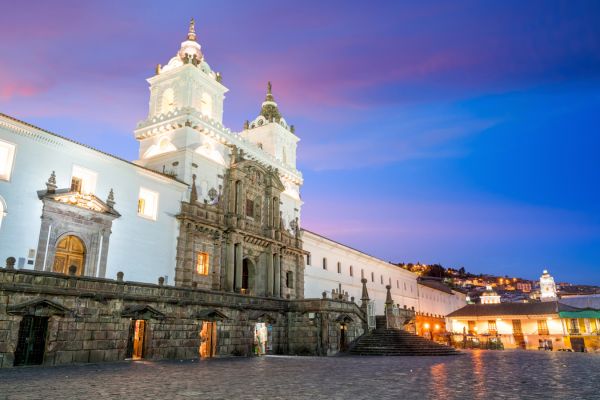
The day begins at Quito’s historic center along Calle de las Siete Cruces toward Plaza de la Independencia. Colonial churches, intricate baroque interiors such as La Compañía de Jesús reveal how European and Indigenous knowledge systems merged. The afternoon in La Ronda and San Marcos highlights living traditions of music, art, and workshops that preserve La Escuela Quiteña. This multisensory immersion underscores how cultural production and scientific curiosity evolved side by side in the Andean world.
Day 3 : Quito To The Cotopaxi National Park: Landscape As Scientific Text
On this new day, our journey begins to head directly to the Avenue of the Volcanoes, where symmetrical snow-capped peaks rise above high-altitude plains. Cotopaxi, one of the world’s highest active volcanoes, dominates the horizon. This environment serves as a practical case study in geological formation and ecological adaptation. Inspired by Edward Whymper’s disciplined style of documentation, participants analyze how explorers shifted from romantic description to measurable scientific reporting. Time near Limpiopungo Lake allows observation of volcanic reflections and páramo vegetation such as chuquiragua. The thin air and open terrain reinforce awareness of altitude’s physiological effects, while wild horses and Andean birds animate the stark landscape. The day emphasizes terrain reading as a scientific method grounded in precision and observation, at the end of the day, we will rest at Hacienda El Porvenir, where Alexander von Humboldt arrived in 1802 to study the Cotopaxi volcano.
Lunch at Hacienda La Ciénega where Alexander von Humboldt arrived in 1802 to study the Cotopaxi volcano.
Day 4 : Cotopaxi Highlands: Altitude, Ecology, And Human Perception
A second day in the Cotopaxi region deepens engagement with the páramo ecosystem and high-Andean geology. Immerse yourself and explore controlled horseback riding routes that demonstrate how altitude influences plant distribution, soil composition, and climate conditions. Whymper’s analytical clarity becomes central to understanding how mountaineering evolved into systematic exploration. Rather than pursuing elevation for conquest, the focus lies in documenting measurable changes in environment and human endurance. Discussions connect glacial formations, volcanic structure, and atmospheric variation, highlighting the Andes as a living scientific archive. This day consolidates the concept that careful field documentation, rather than speculation, laid the foundation for modern earth sciences.
Day 5 : Cotopaxi To Chimborazo: Reconstructing Humboldt’s Experiment
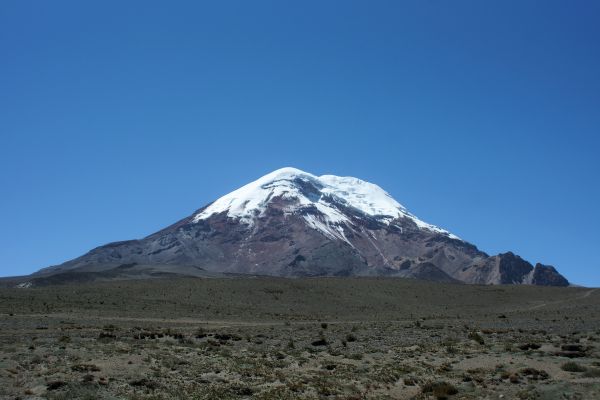
Very early in the morning, you will travel to Chimborazo volcano. Chimborazo’s imposing mass rises as the focal point of Humboldt’s most influential research. Here, the ascent follows a measured gradient mirroring Humboldt’s original approach to scientific experimentation. Rather than prioritizing summit achievement, the experience emphasizes data: temperature shifts, vegetation belts, atmospheric pressure, and the biological limits of life. Participants examine how Humboldt conceptualized altitudinal zonation, recognizing patterns that linked mountain ecosystems across continents. Hike to the refuge, the expansive páramo, llamas grazing in the distance, and wind-swept plains framed by glaciers create a setting of scale and isolation. This reconstruction of method demonstrates how Humboldt transformed raw exploration into a comparative global model of environmental organization.
Day 6 : Chimborazo To Quito: Limits Of Life And Scientific Perspective
The second day in Chimborazo province explores trails across open plains, lakes, and high-altitude forests. Standing before Ecuador’s highest mountain at 6,310 meters, participants will go on hikes around the lodge and the foothills of Chimborazo to observe endemic flora such as the vibrant chuquiragua and encounter Andean wildlife adapted to extreme conditions. The stark contrast between snow-covered peaks and resilient vegetation underscores the interplay of geology, climate, and biological survival. Reflection centers on Humboldt’s integrative model, which connected mountain ecosystems worldwide and laid foundations for biogeography and climatology. After consolidating these observations, the return to Quito provides an opportunity to synthesize insights gained in the Andes before transitioning to the Galapagos.
Day 7 : Quito To San Cristobal Island: Darwin’s First Observation
After breakfast, flight from Quito to San Cristobal’s airport where a naturalist guide will transfer you to your hotel.
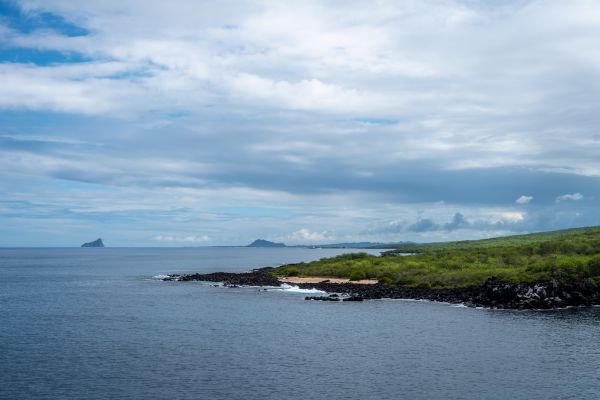
The journey shifts from continental mountains to oceanic isolation with arrival on San Cristobal, where Darwin first stepped ashore in 1835. Coastal paths and Cerro Tijeretas provide a landscape remarkably consistent with Darwin’s field notes while you enjoy snorkeling. Participants retrace his early routes while emphasizing disciplined observation recording terrain, species distribution, and geological formations without premature interpretation. The continuity between Darwin’s descriptions and present-day geography offers a rare opportunity to connect directly with the origins of evolutionary insight. This day underscores how meticulous field notes laid the groundwork for revolutionary scientific ideas.
Day 8 : San Cristobal: Marine Ecosystems And Geological Isolation
Later on, we will continue our exploration continues at El Junco, an inactive volcanic crater containing one of the few freshwater lakes in the Galapagos. Frigatebirds and ducks gather here, illustrating ecological adaptation within isolated systems. The elevated vantage point offers panoramic views of volcanic formations shaped by tectonic forces.
Day 9 : San Cristobal: Life Between Lava And Sea
Early, we will continue our navigation and reach the eroded volcano known as Kicker Rock. Kicker Rock reveals a dramatic eroded volcanic formation rising sharply from the ocean. Beneath the surface lies a vibrant marine ecosystem shaped by nutrient-rich currents. Snorkeling allows direct observation of reef systems, fish diversity, sea turtles, and sharks, illustrating ecological interactions in a relatively undisturbed environment. The experience demonstrates how marine and terrestrial systems connect through oceanic processes. Walking along mangrove-fringed beaches further reveals transitional habitats where species adapt to fluctuating salinity and tidal conditions.
Day 10 : San Cristobal To Isabela Island: Evidence Of A Living Earth
Early breakfast at the hotel and transfer by an impressive trip by light aircraft to Isabela Island to continue with our program, reinforcing the theme of comparison across distinct island systems. Isabela’s volcanic landscapes illustrate the concept of a dynamic planet. At Tintoreras Islet, lava formations and coastal inlets provide evidence of recent geological activity. Snorkeling reveals marine biodiversity thriving alongside stark volcanic rock.
On Isabela Island, volcanic fields illustrate the dynamic Earth Darwin described. Crater alignments and recent lava flows challenge the notion of a static planet. Without modern dating tools, Darwin relied solely on visible structure and stratification to interpret geological processes. The day demonstrates how empirical evidence carefully recorded can overturn long-held assumptions about planetary stability.
Day 11 : Isabela Island: Sierra Negra And Volcanic Processes
A morning trek to Sierra Negra Volcano introduces one of the largest volcanic calderas in the world. The gradual ascent across lava fields and sparse vegetation reveals layered geological history. Participants examine sulfur deposits, hardened lava textures, and expansive crater formations. The hike provides a tangible lesson in plate tectonics and volcanic activity.
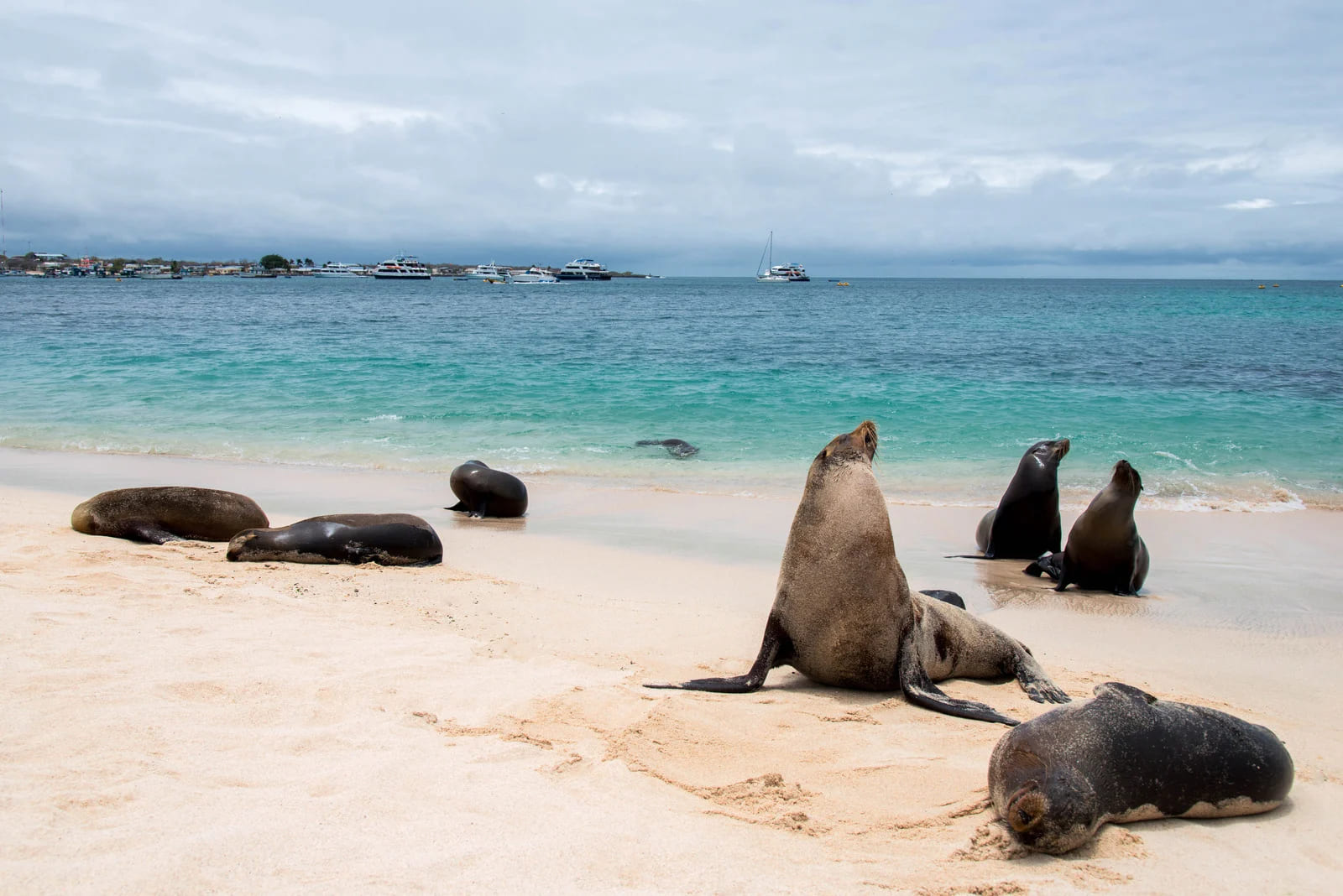
Next, visit Concha Perla, a sheltered lagoon near Puerto Villamil, an opportunity to observe the marine environment up close. Accessible via a wooden boardwalk through mangroves, this calm natural pool is ideal for snorkeling. Participants may encounter sea lions, marine iguanas, colorful reef fish, rays, and sea turtles. The clear, shallow waters provide an accessible introduction to the island’s rich marine biodiversity, complementing the morning’s geological focus with a firsthand look at the living ecosystems supported by these volcanic landscapes also perfect for hiking.
This combination of terrestrial and marine observation reinforces the Galapagos as a place where Earth’s internal forces remain visibly active, shaping habitats in real time.
Day 12 : Isabela To Santa Cruz Island: Evolution In Motion
The morning begins at Flamingo Lagoon, this place offers insight into niche specialization as participants observe feeding behaviors in brackish water habitats. At the Giant Tortoise Breeding Center, variation among tortoise populations illustrates adaptive divergence across islands. Discussions explore conservation science and the evolutionary mechanisms first hinted at in Darwin’s notes. The day emphasizes that evolution is not abstract theory but an observable process shaped by isolation and environmental conditions. Continuing our journey, participants must be at the pier at 2 p.m to take a speedboat to Santa Cruz and keep learning more about Darwin.
Day 13 : Santa Cruz: Conservation And Continuity Of Research
A visit to the Charles Darwin Research Station connects nineteenth-century exploration with contemporary scientific practice. Participants learn how biodiversity monitoring, habitat restoration, and species protection build upon Darwin’s foundational observations. Giant tortoises serve as symbols of both evolutionary insight and conservation responsibility. Discussions focus on ecological balance, invasive species management, and long-term sustainability in fragile island systems. Santa Cruz becomes a bridge between past scientific discovery and present stewardship, demonstrating how exploration has evolved into environmental responsibility.
Day 14 : Santa Cruz: Avian Diversity And Coastal Ecology
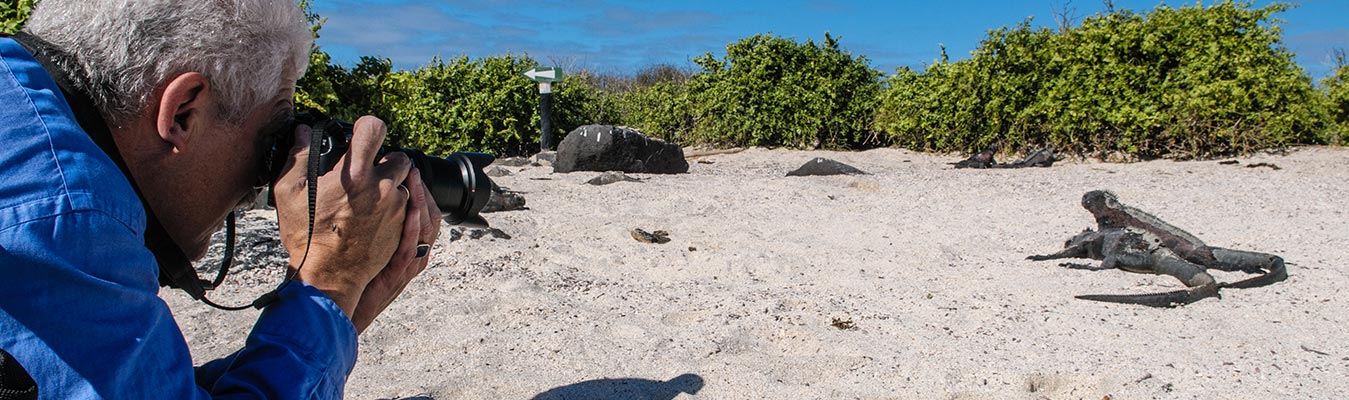
On this day we will continue to the well known Tortuga Bay and Bahia Academia. Kayak along coastal trails lead through mangroves and white-sand beaches alive with bird activity. Observations may include finches, mockingbirds, pelicans, frigatebirds, and herons. Careful attention to beak shapes, feeding strategies, and habitat preferences reinforces principles of adaptive radiation. Marine iguanas and shoreline species illustrate ecological overlap between land and sea. Early morning and late afternoon light enhance wildlife activity, providing optimal conditions for field observation. The day highlights avian diversity as one of Darwin’s most influential lines of evidence in developing evolutionary theory.
Day 15 : A Final Voyage Through Enchanted Waters
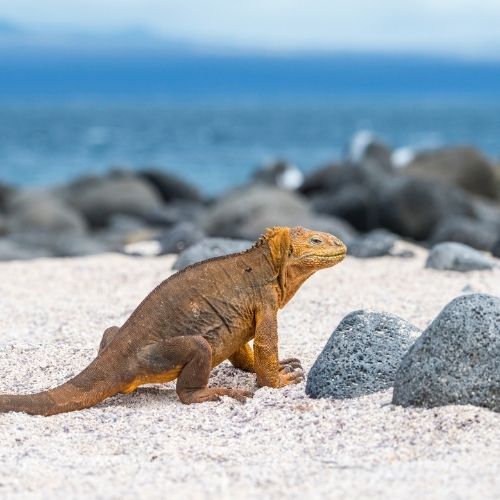
After breakfast at the hotel, we conclude our journey in the spirit of Darwin with a full day of navigation through Galapagos, the living laboratory that inspired some of the greatest naturalists and explorers in history. You will sail to one of the archipelago’s most iconic places: Bartolome, North Seymour (Plaza), or Santa Fe (all of them subject to availability), each offering a unique chapter in the evolutionary and geological story of these enchanted isles: from Bartolome’s dramatic volcanic landscapes and panoramic views, echoing Humboldt’s fascination with Earth’s forces, to North Seymour’s thriving colonies of blue-footed boobies and frigatebirds that bring Darwin’s theories vividly to life, or Santa Fe’s endemic land iguanas and turquoise bays framed by towering prickly pear cacti.
After this, we will return to Santa Cruz to rest and finish our program.
Day 16 : Return To Mainland Ecuador - Quito
After the last guided exploration, participants transfer to Baltra Airport for the return flight to mainland Ecuador. The transition from volcanic islands back to the Andean capital symbolically reunites the two landscapes that shaped modern natural science. The experience closes with a renewed understanding of Earth as an interconnected system of geology, climate, and life. You will sleep near the airport so you can catch your international flight the next day.
Day 17 : Departure And Farewell
Early breakfast at the hotel.
After this, at Mariscal Sucre International Airport, you will return home after having experienced an epic adventure full of knowledge.
Travel Tips
- Arrive well rested to adjust comfortably to Quito’s high elevation.
- Hydrate consistently during Andean excursions to support altitude adaptation.
- Use reef-safe sunscreen to protect delicate marine ecosystems.
- Bring a field journal to document observations in the spirit of Humboldt and Darwin.
- Protect cameras and electronics from humidity and salt exposure in coastal environments.
Weather Preparedness
The Andes feature rapidly changing mountain weather, with strong equatorial sun, cool winds, and sudden temperature shifts, especially above 10,000 feet. Layered clothing, sun protection, and wind-resistant outerwear are essential. In contrast, the Galapagos offers a warm coastal climate with intense sunlight and refreshing ocean breezes. Lightweight, breathable fabrics, sun hats, and light rain protection ensure comfort across diverse ecosystems.
Fitness Requirements
This journey involves moderate to high physical activity, including extended walks at high altitude in the Andes and hikes across uneven volcanic terrain in the Galapagos. Participants should feel comfortable walking several hours daily on varied surfaces such as cobblestone streets, grassy páramo, rocky trails, and lava fields. While no technical climbing is required, good cardiovascular condition enhances comfort and overall enjoyment.
Accommodation
Quito
- Illa Experience Hotel or similar.
- Wyndham Quito Airport or similar.
Cotopaxi
- Hacienda El Porvenir or similar.
Chimborazo
- Chimborazo Lodge or similar.
San Cristobal Island
- Hotel Indigo Galapagos or similar.
Isabela Island
- Iguana Crossing Hotel or similar.
Santa Cruz Island
- Finch Bay Galapagos Hotel or similar.
FAQs
Quito sits above 9,000 feet, and some excursions reach higher elevations. Most travelers adapt gradually with hydration and steady pacing, though mild altitude symptoms may occur initially.
No academic background is necessary. The program is designed for curious travelers interested in science, history, and exploration.
Yes. The Galapagos is renowned for close observation of endemic species, including marine iguanas, sea lions, tortoises, and diverse birdlife, always within protected guidelines.
Expect urban cobblestone streets in Quito, high-altitude grasslands in the Andes, and rocky volcanic paths and sandy beaches in the Galapagos. Supportive walking shoes are strongly recommended.
Related Tours